
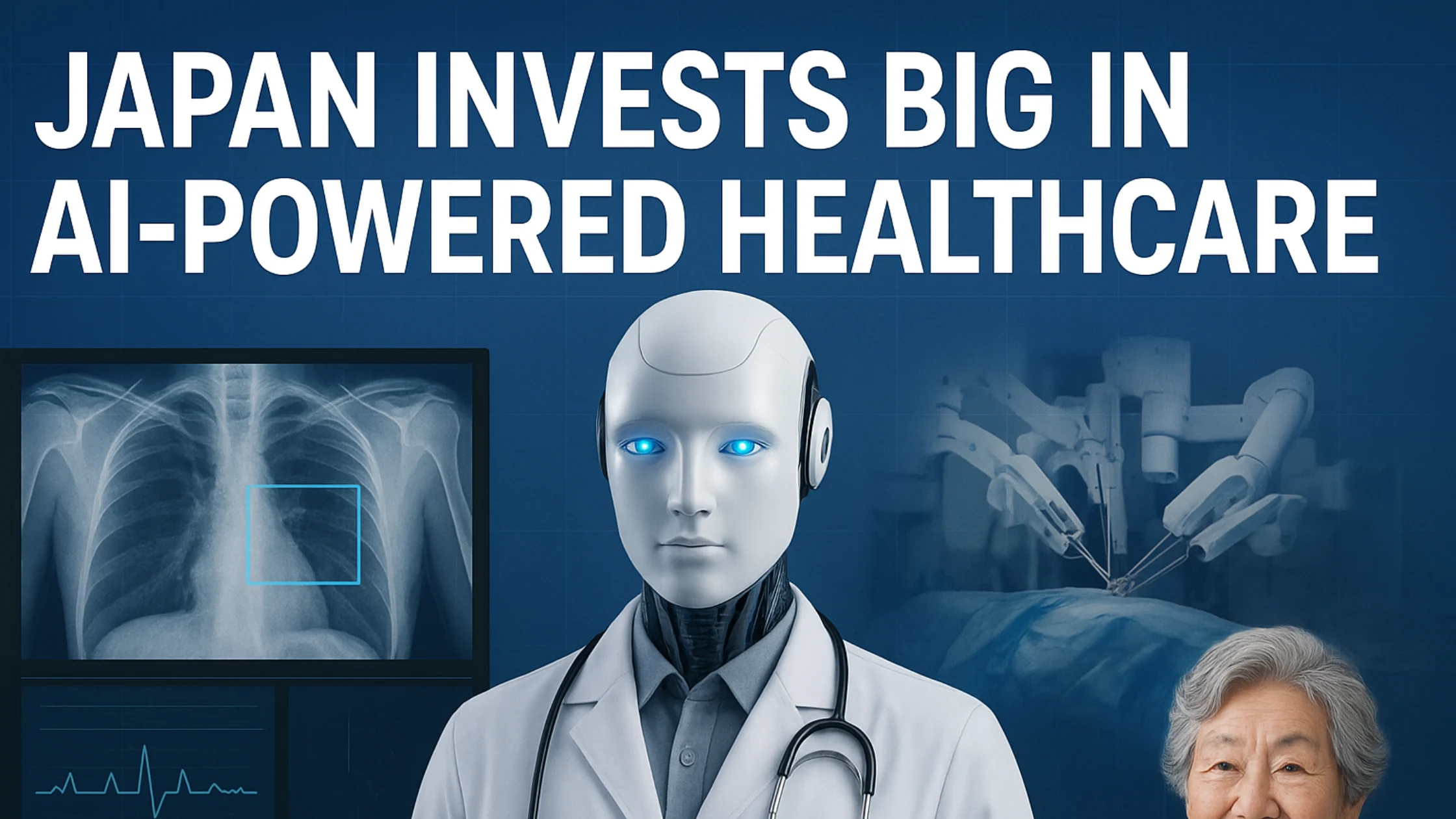
Japan has taken a bold step toward redefining the future of global healthcare. In a landmark announcement, the Japanese government confirmed large-scale investments in AI-powered healthcare technologies, focusing on advanced diagnostics, robotic surgery, and elderly-care innovations. As one of the world’s most technologically advanced countries — and one with the fastest-aging population — Japan’s move signals a new era where artificial intelligence becomes central to medical progress.
This initiative is expected to reshape hospitals, improve patient outcomes, support overburdened medical staff, and create a model that other countries may soon adopt.
Why Japan Is Pushing AI Healthcare Now
Japan faces unique demographic and healthcare challenges:
- Nearly 30% of its population is over 65 years old, the highest proportion globally.
- Shortage of healthcare workers is increasing each year.
- Medical demand is rising while rural areas struggle with limited hospital access.
AI is seen as the most efficient and scalable solution. By integrating AI into diagnostics, surgery, nursing, and elder-care support, Japan aims to reduce system strain while improving the quality of life for millions.
1. AI-Driven Diagnostics: Faster, Smarter, More Accurate
One of the biggest components of Japan’s new investment is AI diagnostic systems — software capable of detecting diseases earlier and more accurately than traditional methods.
Key developments include:
● AI Imaging Tools
Japan is scaling AI platforms that read X-rays, MRI scans, and CT images. These tools can detect:
- early-stage cancers
- heart abnormalities
- neurological disorders
- fractures and internal injuries
AI can analyze an image in seconds, reducing diagnostic workload and preventing human error.
● Predictive Health Analytics
AI systems can evaluate a patient’s medical history and predict:
- risk of stroke
- probability of heart failure
- likelihood of chronic diseases
This helps doctors begin treatment before symptoms become severe.
● Rural & Remote Healthcare Support
Using cloud-based AI, small clinics can receive instant diagnostic assistance from major hospitals, bridging Japan’s rural-urban healthcare gap.
2. Robotic Surgery: Precision and Safety for the Future
Japan has already been a pioneer in robotics — and now it aims to become the global leader in robotic-assisted surgery.
Planned advancements include:
● Next-Gen Surgical Robots
These AI-supported surgical systems can operate with:
- extremely precise movements
- reduced invasiveness
- lower blood loss
- faster recovery times
AI can guide surgeons by enhancing visibility, identifying tissues, and reducing the risk of complications.
● Remote Surgery (Telesurgery)
Doctors in Tokyo may soon be able to perform operations on patients in Hokkaido through 5G-powered robotic systems.
This is especially crucial during disasters or in regions with limited specialists.
● AI-Training Simulations
AI will be used to train young surgeons through virtual simulations, improving skill levels nationwide.
3. Elderly-Care Innovations: Supporting Japan’s Aging Society
One of the most praised aspects of Japan’s investment is AI and robotics for elderly care, aimed at improving comfort, safety, and independence.
What’s being introduced:
● AI-Enabled Care Robots
Robots that help with:
- lifting patients
- monitoring vitals
- reminders for medicine
- assisting with daily tasks
These reduce the physical strain on caregivers and improve patient dignity.
● Smart Nursing Homes
Facilities equipped with sensors, AI monitoring, and automated reporting systems to prevent accidents and intervene faster in emergencies.
● Social Companion Robots
Japan is expanding emotional-support robots like PARO and Lovot to reduce loneliness and improve mental health among seniors.
4. National Impact: Healthcare Transformation on the Horizon
Japan’s investment is expected to deliver long-term advantages:
- Reduced hospital burden through automation
- Lower chances of misdiagnosis
- Better care for the elderly population
- Stronger healthcare resilience during pandemics or emergencies
- Expansion of Japan’s global leadership in health technology exports
Economists predict that AI healthcare could become a central pillar of Japan’s innovation economy by 2030, generating new jobs and attracting global partnerships.
Conclusion
Japan’s massive investment in AI-powered healthcare marks the beginning of a new medical revolution. By combining advanced diagnostics, robotic surgery, and elderly-care innovations, the country is not only addressing its immediate challenges but setting new global standards for smart healthcare systems.
As AI continues to evolve, Japan’s approach could become a blueprint for countries seeking to modernize their healthcare sectors — proving that technology, when used wisely, can transform human lives on an unprecedented scale.

admin
Content Writer and Specialist.